
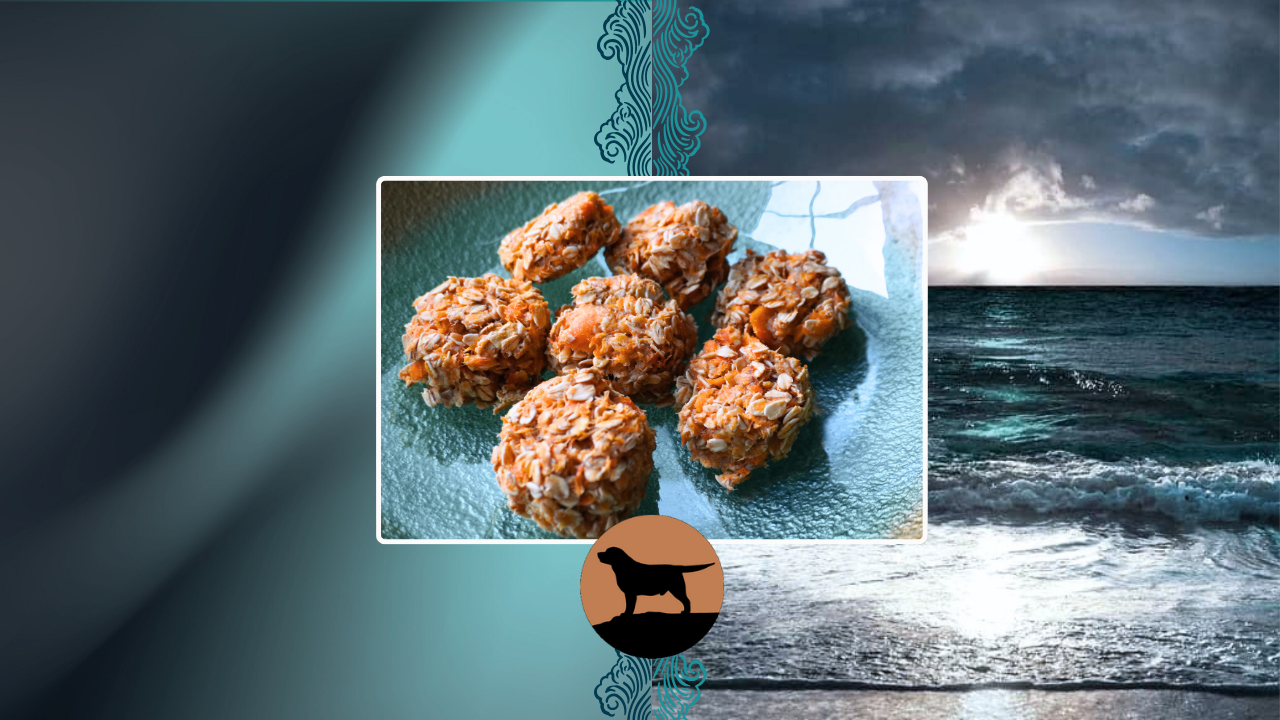
These three-ingredient salmon oat cakes are easy to make, packed with protein and omega-3s and safe for dogs at any life stage. Whether you’re raising puppies, supporting a nursing dam or just want to share a healthy treat with your best friend, this recipe keeps it clean and functional.
Watch: How to Make Salmon Oat Cakes for Dogs
This video shows step-by-step how we make these simple, nourishing salmon cakes for our dogs. In the video, we quadrupled the recipe.
Ingredients:
- 1 (6 oz) can wild-caught salmon, in water, no salt added
- 1 cup rolled oats
- 1 egg
Instructions:
- Preheat oven to 350°F.
- Mix salmon (bones and all), oats and egg in a bowl.
- Shape into small patties or rounds
- Tip: Use an 1/8 cup to shape
- Place on a parchment-lined baking sheet.
- Bake for 18–22 minutes, or until lightly golden.
- Cool completely. Store in the fridge up to 5 days or freeze for later.
What’s to Love:
- Salmon is naturally rich in omega-3 fatty acids, which support brain development in puppies, reduce inflammation and promote joint mobility and skin health—especially important for large breeds like Labs[1].
- Oats offer soluble fiber that supports digestion and helps regulate blood sugar[2].
- Eggs are a complete protein with essential amino acids and fatty acids that help build strong muscles and support skin and coat condition[3].
Note: This recipe is safe for most puppies starting around 8 weeks of age, as long as you introduce it in small pieces; the puppy is already weaned and tolerating solid food; and there are no allergies or sensitivities to fish, egg or oats.
References
- Canine Arthritis Resources and Education. “Overview of Omega-3 Fatty Acids for Osteoarthritis in Dogs.” https://caninearthritis.org
- Middelbos, I. S., et al. “Dietary fiber sources affect the gastrointestinal microbiota of dogs.” Journal of Nutrition, 2007. https://pubmed.ncbi.nlm.nih.gov/17374665/
- PetMD. “Can Dogs Eat Eggs?” https://www.petmd.com/dog/nutrition/evr_multi_eggs_for_pets2

Disclaimer: While these recipes reflect years of breeding experience and holistic care, they are not medical advice. Always consult your veterinarian or trusted breeder to determine what’s best for your individual dog.
Leave a Reply